
Speedy vegetarian Japchae noodles is a Korean dish of glass noodles and vegetables seasoned with soy sauce and sesame oil. Japchae is often served as a side dish, also known as ‘banchan’. However, it can also be enjoyed as a main dish.
The great thing about japchae is that it is delicious hot, at room temperature or refrigerated. So if you want to make this ahead and leave it in the fridge it will still be just as good.

Speedy vegetarian japchae noodles
Most japchae recipes are for large batches of noodles to serve a family. These recipes are very time-consuming as they involve a lot of chopping. Also, in more authentic japchae recipes each vegetable is fried separately adding many steps to the cooking process. I have made japchae in this way several times and it is delicious.
I, however, wanted to see how the recipe would turn out if I was just cooking for myself and cooked all the vegetables at once. For me the dish was almost identical to when I had cooked it before and definitely still as delicious. If you’re just cooking for yourself and want a quick option then this recipe is perfect.
Is japchae vegetarian or non vegetarian?
Japchae comes in many varieties which include various different vegetables and meats. More authentic recipes will often include fried strips of beef fillet which have been marinated in soy sauce, mirin, garlic and sesame oil. If you are not vegetarian then feel free to add this into the dish. I, however, think the recipe is delicious without the meat.
Vegan japchae?
This is a delicious vegetarian midweek meal or fun lunch. Omitting the egg ribbons will make this dish 100% vegan. If you wanted to add a little more vegan protein to this dish you could add in some fried tofu pieces.
Sourcing Ingredients for speedy vegetarian japchae
Mainstream supermarkets generally stock most staple Asian groceries nowadays. Some items, such as the glass noodles, may be harder to find. Asian grocery stores or online Asian supermarkets, such as Starry Mart, should stock the more niche ingredients. When it comes to soy sauce my favourite type is ‘Lee Kum Kee light soy sauce’ as it has a very simple taste and is usually pretty cheap.

What can I substitute for japchae noodles?
Traditionally japchae uses Korean sweet potato starch noodles, also known as dangmyeon. Usually these are labelled as Korean glass noodles and if you look at the ingredients list you will see that are made primarily of sweet potato starch. I would recommend these ‘Nong Shim Miga glass noodles’ or these ‘Hosaku Korean glass noodles‘ which are made purely out of sweet potato starch and water.
If you are able to find these I would highly recommend using them. If you cannot find them, however, there are some other noodles you could use.
The second closest option would be to use any kind of rice noodles. These will look similar to the glass noodles but, unfortunately, will not have the same unique texture than Korean glass noodles have. However, any type of noodle will still taste delicious in this recipe when paired with the vegetables and sauce.
Is Korean japchae healthy?
Overall japchae is a relatively healthy dish. This recipe combines a variety of vegetables and spices which all have their own specific health benefits. Spinach, for example is high in vitamin K and a source of magnesium.
Mushrooms, meanwhile, are one of the few plant-based sources of vitamin D. The peppers and carrots, among other benefits, add fibre and vitamin C.
If you are worried about how healthy this recipe is I have a couple of recommendations. Firstly be careful with how much oil you add when frying or add less sesame oil if you are concerned about fat content. I you want to lower the salt content try using a low sodium soy sauce or add a little less soy sauce at the end.

Recipes similar to speedy Korean Japchae
For more quick noodle recipes, Asian recipes and Korean recipes check these out:
- Asian tofu noodle salad
- Fire noodle spring rolls
- Vegetarian kimbap
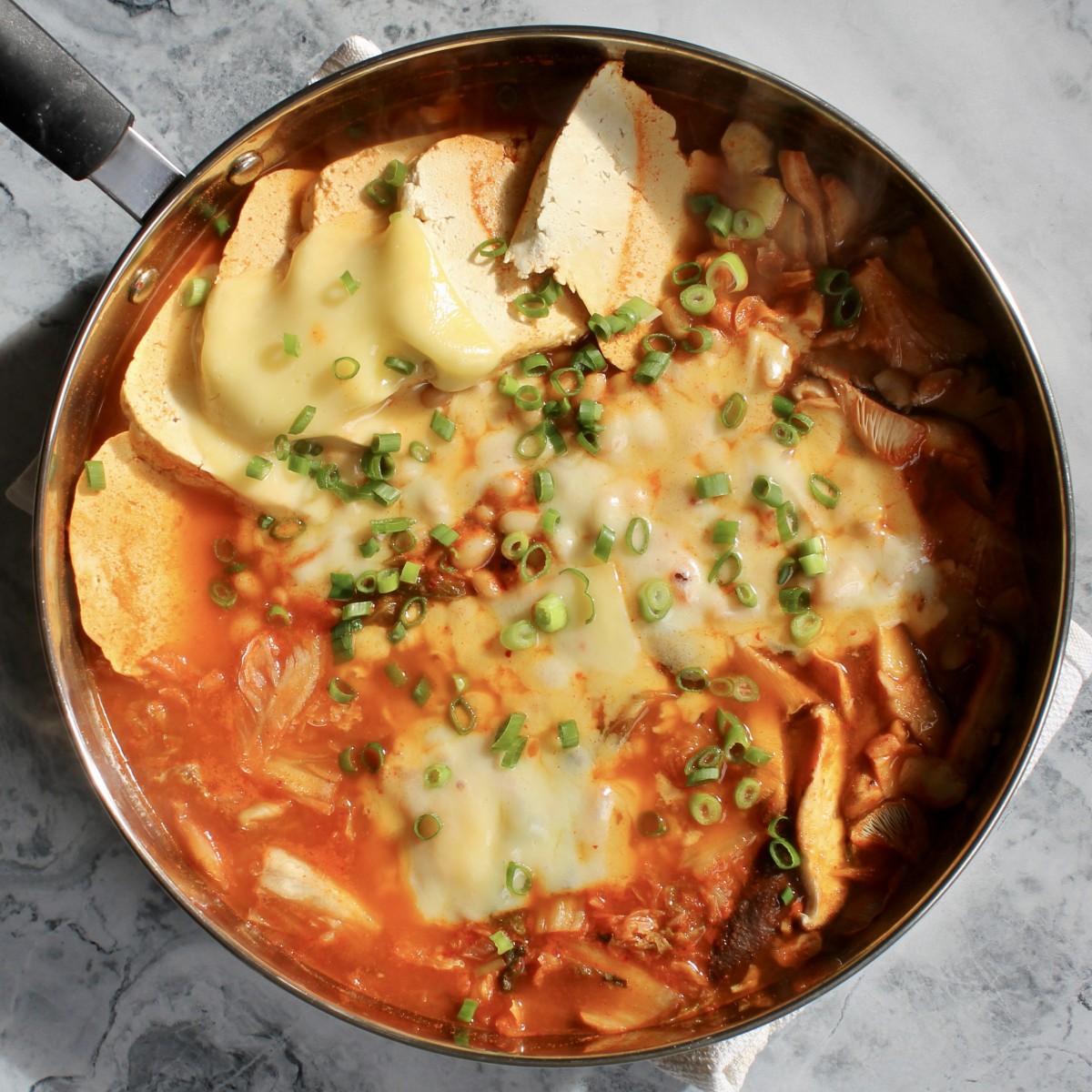
- Vegetarian Korean army stew
- Kimchi and mozzarella dumplings


Speedy Vegetarian Japchae Noodles
Ingredients
Method
- Cook noodles according to packet instructions. Drain and rinse with cold water until cool. Set aside to drain.
- In a large frying pan add 1 tsp of vegetable oil and heat on a medium-high heat. Add in the onion and fry, stirring often, for 2 minutes until slightly softened.
- Add in the rest of the vegetable oil followed by the garlic, ginger, mushrooms, carrot and red pepper. Season with a pinch of salt. Turn up the heat and fry for around 4 minutes until the vegetables are just cooked and any water from the mushrooms has evaporated.
- Add in the spinach and fry for another minute until just wilted.
- Tip the vegetables into a large bowl and set aside.
- Meanwhile put the pan back on the heat and add a little more oil, if necessary. Tip in the beaten egg and let cook as a thin omelette. Fry until just cooked on both sides. Place on a chopping board, and once cooled slightly, cut the egg into 1cm(0.5inch) ribbons.
- Into the bowl of vegetables add in the noodles, soy sauce, sugar and sesame oil. Stir to combine.
- Transfer to a plate and top with the egg ribbons, a sprinkle of sesame seeds and the spring onion. Enjoy!



love them
Forgot to rate